Why hair is the hardest thing a robot vacuum picks up
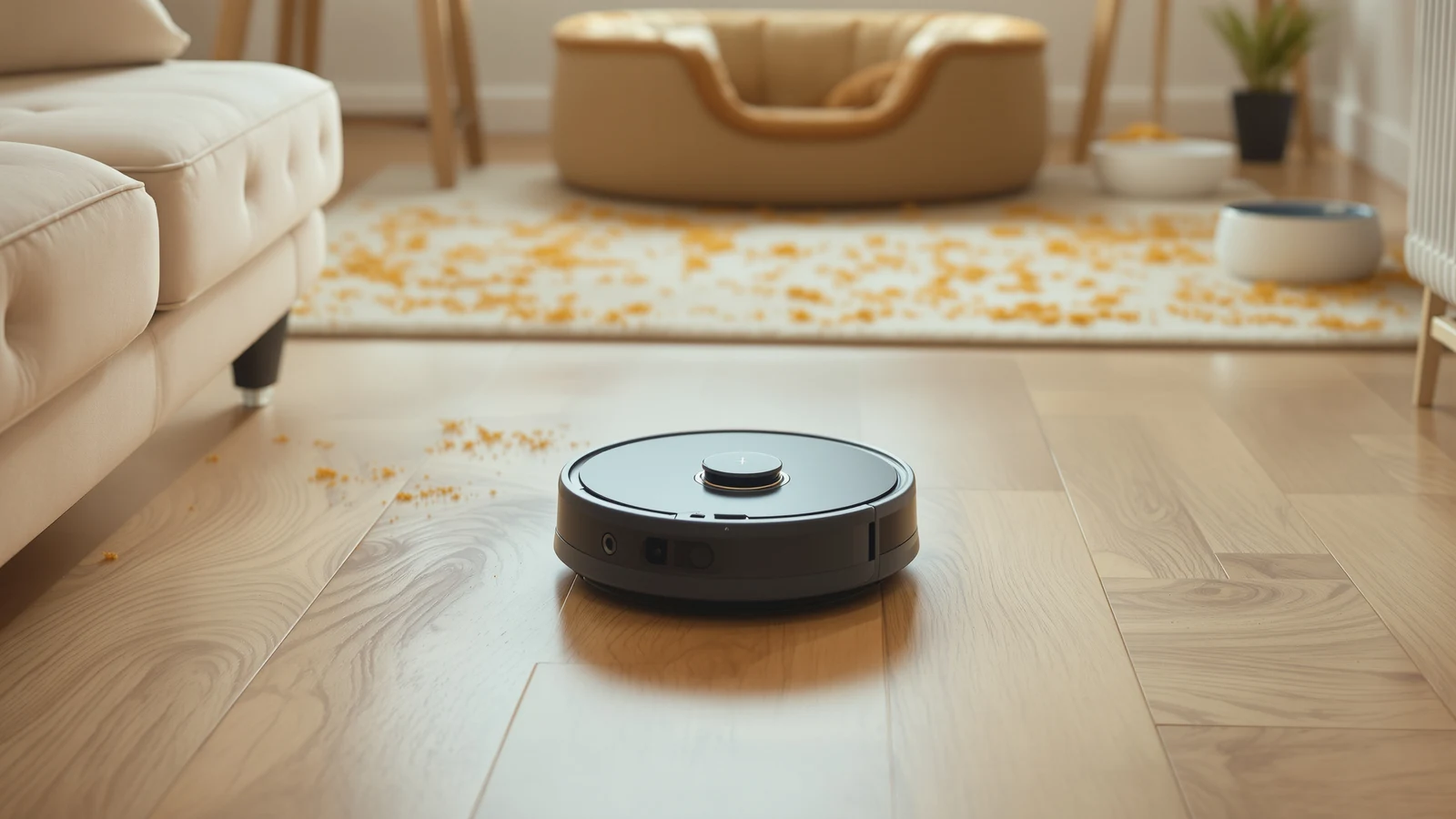
Dust and crumbs sit on top of a floor. Hair catches on anything that spins, and a shedding pet produces it faster than most robots are built to clear it. Three parts of the machine take the hit.
Wrap
A bare bristle roller is a hair magnet: strands catch at one end and wind tighter with every rotation until the motor strains or the brush stops turning altogether. Long pet hair wraps faster and tighter than short human hair, which is the entire reason an anti-tangle brush design exists as a selling point rather than an afterthought.
Bins
An onboard dustbin sized for a hair-free apartment can run for a week between empties. The same bin in a shedding household fills in a day or two, because fur is bulky relative to its weight and packs the bin’s volume long before it hits any weight limit. That gap is the direct reason self-emptying docks exist.
Filters
Fine hair and dander work past the main bin and into the filter, where they build up gradually and quietly reduce airflow — which means weaker real-world pickup even if the headline suction figure never changes. The Shark AI Ultra names HEPA filtration, which traps finer particles than a standard filter but still needs the periodic rinsing or replacement its manual specifies.
Rubber, comb and brushless: the anti-tangle designs each listing names
Robot-vacuum brushes generally take one of three approaches to resisting hair wrap: a rubber-finned roller that flexes to shed hair instead of gripping it, a comb-toothed bar that strips hair off the roller as it spins, or a brushless design that relies on suction alone at the floor inlet, with nothing rotating for hair to catch on. None of that is marketing copy — it’s how the mechanism works — but a listing naming a specific design is still worth more than one naming a slogan, because a slogan with no mechanism behind it can mean anything.
Here is exactly what each of the five listings in this guide names, with no filling in the blanks where a listing stays quiet:
- Lefant M210 OMNI — names a “Tangle-Free Roller,” a specific roller design, without saying which of the three mechanisms above it uses.
- Roborock Q7 M5+ — names a “Dual Anti-Tangle System for Pet Hair & Carpet,” implying two brushes working together, again without specifying the mechanism.
- Shark AI Ultra AV2511AE — names “Anti-Hair Wrap” on the title, a claim rather than a described part.
- Roborock Qrevo 2 Pro — names “Zero-Tangle,” the same kind of claim, paired with a “FlexiArm Edge Mopping” arm for reaching along baseboards.
- iRobot Roomba Max 715 — names no anti-tangle brush design at all in its title; it leads with suction and dock capacity instead.
Treat a named design as a starting point for your own research into how that specific model’s brush is built, not as a guarantee it will never need a pair of scissors. Every roller-based robot eventually collects some hair at the axle ends; an anti-tangle claim mainly changes how often.
Why a self-emptying dock matters more in a shedding home
A plain charging base does one job: it charges the battery. A self-emptying dock also pulls the robot’s bin into a larger bag or bin at the base, and the interval a maker quotes for that — in days or weeks — is calibrated to what that maker considers a typical home. A shedding dog or a cat that sheds seasonally shortens every one of those intervals, which is exactly why the gap between a 60-day dock and a 90-day dock is worth reading closely rather than skimming past.
Across the five listings here, the stated dock behavior varies more than the brush claims do:
- iRobot Roomba Max 715 — an AutoEmpty Dock the title says self-empties for up to 90 days, the longest interval named in this guide.
- Roborock Q7 M5+ — self-empties for up to 7–9 weeks, per the title, roughly in the middle of the range.
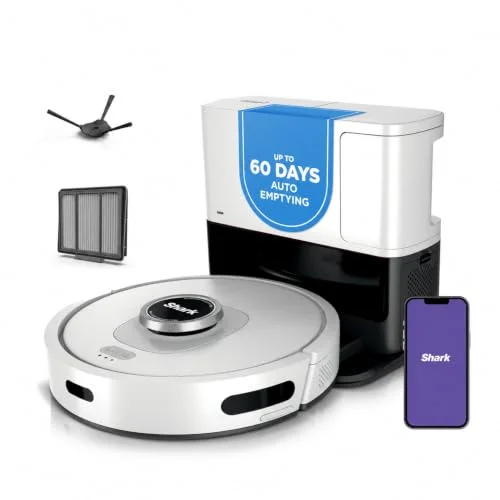
- Shark AI Ultra AV2511AE — sold in a “60-Day Capacity” configuration, which is the dock interval Amazon lists for this specific listing.
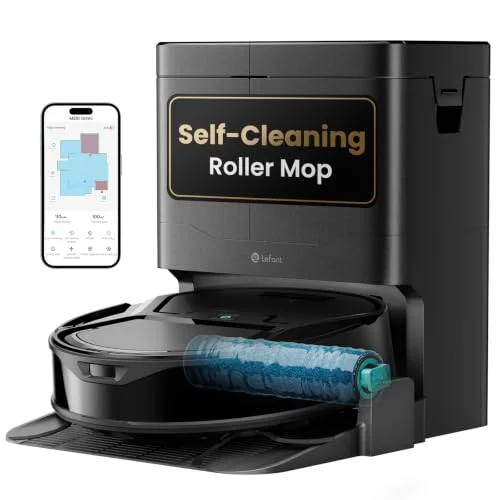
- Lefant M210 OMNI — its base is described as “Self-Cleaning & Self-Drying,” language that reads as station maintenance rather than a stated dust-emptying interval; the robot’s own bin is listed at 800 mL, and the listing doesn’t say how often the base empties it for you.
- Roborock Qrevo 2 Pro — its dock is described around “High-Temperature Mop Self-Cleaning,” which is about washing the mop, not emptying the dust bin; no dust self-empty interval is named.
That last point matters: a dock that washes its own mop pads is a genuine convenience, but it is a different convenience from one that empties the dust bin, and this guide’s two listings built around mop maintenance don’t promise the second one.
Obstacle recognition, food bowls and pet accidents
A robot that can map a room is not the same as one that can recognize what’s sitting on the floor. Among these five listings, only the Roborock Qrevo 2 Pro names obstacle-avoidance hardware outright — “Smart Obstacle Avoidance for Pet Hair & Carpet” — which suggests it’s built with cameras or sensors meant to steer around clutter before contact. The other four listings in this guide don’t mention obstacle recognition at all, which doesn’t mean they will collide with everything in their path, but it does mean you shouldn’t assume they won’t.
In practice, that gap is a household-prep problem more than a shopping problem. A water bowl, a food mat or a stray toy in a robot’s path can be knocked over by a machine with no stated obstacle sensing, soaking the floor it was meant to clean. The sharper risk is a fresh pet accident: a robot that drives through one before anyone notices can spread it across the route it just mapped. None of the five listings here claims it can reliably identify organic messes and avoid them, so the safest habit — regardless of which robot you buy — is picking up bowls, cords and toys and doing a quick floor check before every unsupervised run, at least until you know how a specific unit behaves in your home.
The five, compared
Suction figures aren’t directly comparable across brands — see our FAQ below — so read the anti-tangle and dock columns first.
| Robot | Best for | Listed suction | Anti-tangle design | Dock | Price | Get it |
|---|---|---|---|---|---|---|
 Roomba Max 715 |
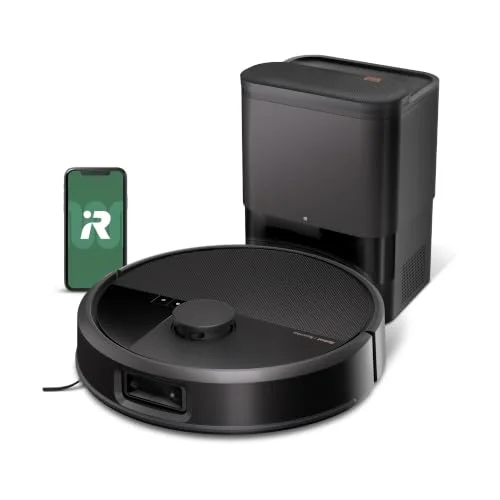
Shedding homes overall | 30,000 Pa | Not named | AutoEmpty, up to 90 days | $379.05 | Get it |
 Roborock Q7 M5+ |
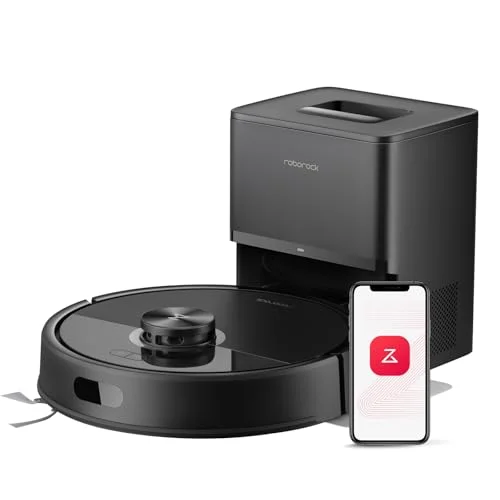
Most explicit pet-hair claim | 10,000 Pa | Dual Anti-Tangle System | Self-empty, 7–9 weeks | $199.99 | Get it |
 Roborock Qrevo 2 Pro |
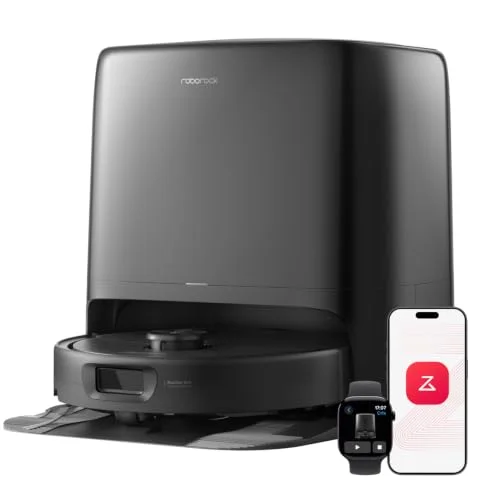
Obstacle-heavy homes | 20,000 Pa | Zero-Tangle | Mop self-cleaning only | $449.99 | Get it |
 Shark AI Ultra AV2511AE |
Bagless base | Not listed | Anti-Hair Wrap | Bagless, 60-day capacity | $249.99 | Get it |
 Lefant M210 OMNI |
Slim design, budget | 20,000 Pa | Tangle-Free Roller | Self-cleaning & self-drying base | $199.99 | Get it |
Our picks, and who each one is for
iRobot Roomba Max 715 with AutoEmpty Dock
Best for shedding homes overall
The strongest suction figure and the longest self-empty interval in this guide, both relevant in a home that sheds daily. The AutoEmpty Dock is built around bags, which seal the dust in rather than letting you tip it back into the air when you empty it. What the listing doesn’t give you: a named anti-tangle brush design, a mop, or an explanation of the “PrecisionVision” label on the title — read the full listing before assuming what that feature does.
Buy this if the dock’s emptying interval matters more to you than anything else on the spec sheet.
Roborock Q7 M5+ Robot Vacuum and Mop
Best for the most specific pet-hair claim at this price
Of the five titles in this guide, this is the only one that names its anti-tangle hardware specifically “for Pet Hair & Carpet” rather than a generic anti-wrap slogan. It also navigates by PreciSense LiDAR, so it plans a route instead of bouncing between furniture, and its dock self-empties for roughly two months between bag changes, per the listing. The title calls it a vacuum and mop, but gives no detail on the mop itself — no tank size, no pad type — so check the current listing if mopping matters to your decision.
Buy this if you want a dock that empties itself and a brush system named specifically for pet hair, without flagship pricing.
Roborock 2026 New Qrevo 2 Pro Robot Vacuum and Mop
Best for homes with bowls, toys and cords on the floor
The only robot in this guide whose title names obstacle-avoidance hardware specifically “for Pet Hair & Carpet,” which is the household this guide is written for. It pairs that with a Zero-Tangle brush claim and a FlexiArm that extends to mop along edges and baseboards, and the dock runs a high-temperature self-cleaning cycle on the mop itself. What it doesn’t name is a navigation system (no LiDAR is mentioned in the title) or a dust self-empty interval — the dock’s stated self-cleaning is about the mop, not the bin.
Buy this if a water bowl or a basket of toys is a permanent fixture on your floor.
Shark AI Ultra Robot Vacuum AV2511AE
Best for a self-emptying base with nothing to reorder
Shark prints no pascal figure on this listing — it promises “Powerful Suction” and leaves the number out — and leans instead on LiDAR mapping and what it calls Matrix Clean navigation. The title names an Anti-Hair Wrap design and HEPA filtration, useful against pet dander as well as hair, and this listing is sold in a 60-Day Capacity configuration, meaning the bagless base is rated to hold that long between empties. The trade-off of bagless is that you tip the bin out yourself when it’s full, rather than pulling a sealed bag.
Buy this if reordering dock bags annoys you more than emptying a bagless base every couple of months.
Lefant M210 OMNI Robot Vacuum and Mop
Best for tight clearances and a lower price
At 85 mm tall, this is the slimmest robot in this guide by a wide margin, which matters if your sofa or bed clearance has ruled other robots out. It names a Tangle-Free Roller and lists 20,000 Pa of suction, high among this group on paper. Its base is described as self-cleaning and self-drying, which reads as maintaining the station itself rather than emptying the robot’s own 800 mL dustbin on a stated schedule — the listing doesn’t give a days-between-empties figure the way the Roomba Max 715 or the Q7 M5+ do.
Buy this if low clearance under your furniture is the deciding factor and you’re fine emptying the bin yourself.
The weekly five minutes no robot removes
Every robot in this guide is being sold on how little it needs from you, and that is mostly true of the floor itself. It is not true of the machine. A named anti-tangle brush still collects some hair at the ends of the roller, where it meets the axle — that junction is rarely what an anti-tangle claim is describing, and most owners still clear it by hand every so often. A self-emptying dock still needs its bag changed eventually, or its bagless bin wiped out, and the HEPA filter the Shark names, like any filter, needs the rinsing or replacement schedule its manual sets out, not an indefinite run.
The two vacuum-and-mop units here — the Lefant M210 OMNI and the Roborock Qrevo 2 Pro — add their own small chores on top. Neither listing says the dock refills a clean-water tank or empties dirty water on its own, so budget a minute or two for that if mopping is part of why you bought one. And the robot’s charging contacts and the dock’s sensor windows collect a film of dust and hair over weeks that a quick wipe clears in seconds but that nothing else in the system will ever flag for you. None of this changes the case for any of these five robots. It just means the honest pitch is “far less work,” never “no work.”
How we picked — and what we can’t tell you
Titles, specs and current prices
We compared the published titles, bullet specs and current Amazon prices for these five robot-vacuum listings, reading each one specifically for how it names its anti-tangle hardware and how it describes its dock’s emptying schedule, including variant labels such as Shark’s “60-Day Capacity” configuration where the listing states a dock interval that way rather than in the main bullets. Where a listing stayed silent on a spec — navigation system, mop type, obstacle sensing — our comparison says so rather than filling the gap with a guess. You can see the same comparison method applied across the wider market in our main robot-vacuum comparison.
No testing lab, no ratings
We do not own these five robots, we do not run a testing lab, and we do not publish scores out of ten. This category also has no verified rating data behind these listings, so this guide carries no star ratings and no paraphrased review sentiment — we would rather tell you what a listing doesn’t say than invent a number to fill the silence. How a brush ages after a year of daily shedding, or how a dock’s seals hold up, is something only time with the machine in your own home can answer.
Common questions
Do self-emptying docks make a real difference with pet hair?
Yes, mainly because a shedding home fills a small onboard bin far faster than the dry-dust homes these capacity figures are usually calibrated against. Among the robots in this guide, the stated intervals range widely: the iRobot Roomba Max 715 self-empties for up to 90 days, the Roborock Q7 M5+ for 7–9 weeks, and the Shark AI Ultra is sold in a 60-Day Capacity configuration. The Lefant M210 OMNI and the Roborock Qrevo 2 Pro describe their bases as self-cleaning rather than giving a dust-emptying interval, so don’t assume either one matches the others on that point.
What's the difference between the anti-tangle designs these robots list?
Robot brushes generally resist hair wrap one of three ways: rubber fins that flex to shed hair, comb-style teeth that strip hair off the roller as it turns, or a brushless inlet with nothing spinning for hair to grab. None of the five listings in this guide names which mechanism it uses — they name results instead, like “Tangle-Free Roller,” “Dual Anti-Tangle System,” “Anti-Hair Wrap” and “Zero-Tangle.” A named claim is more trustworthy than none at all, which is the position the Roomba Max 715 is in here, but it’s still worth reading the full listing for the actual mechanism before you buy.
Will a robot vacuum avoid my pet's food bowl or an accident?
Only if the listing specifically says so. Of the five robots here, only the Roborock Qrevo 2 Pro names obstacle-avoidance hardware, described as “Smart Obstacle Avoidance for Pet Hair & Carpet.” The other four listings don’t mention object recognition, so the safer habit with any of them is picking up bowls, cords and toys and checking the floor before an unsupervised run, especially after a fresh accident that a robot with no stated obstacle sensing could spread rather than avoid.
Does higher Pa suction mean better pet-hair pickup?
Not reliably across brands. A pascal figure describes a fan’s pressure difference, and none of the five listings in this guide explains how its number was measured; Shark, in fact, prints no figure at all for the AI Ultra. Within one brand’s own lineup a higher number usually does mean a stronger fan, but a named anti-tangle brush and a dock’s stated emptying interval say more about how the robot will actually perform in a shedding home than the suction figure alone.
More from Best Robot Vacuums Guide
See how these five stack up against the rest of the market in our full robot vacuum comparison, browse every guide we’ve published, or read more about our research process on the About page.